HISTORICAL PILLARS CANONICAL ESSAYS

ENTER THE CANON

Classic cinema is often trapped under layers of reverence. When we view these pictures through their editing choices, camera movements, and thematic tensions, their immediate power returns.

Gothic Noir 1955 • Directed by Charles Laughton

The Night of the Hunter

Actor Charles Laughton directed only one feature film in his life, yet it remains one of the most astonishing aesthetic statements in American history. Drawing heavily on German Expressionism and silent-era silhouettes, cinematographer Stanley Cortez sculpted shadows with razor-sharp geometric precision.

The river journey undertaken by the runaway children John and Pearl is filmed not as a documentary escape, but as an otherworldly Grimm fairytale. Spiders, owls, and frogs appear in extreme foreground close-up against starry matte paintings, while Lillian Gish’s character provides an austere moral counterweight to Robert Mitchum’s terrifying wolf in preacher’s robes.

Why it matters today: The film anticipates the psychological vulnerability of American rural cinema and demonstrates how stylized lighting can convey inner dread more effectively than graphic violence.
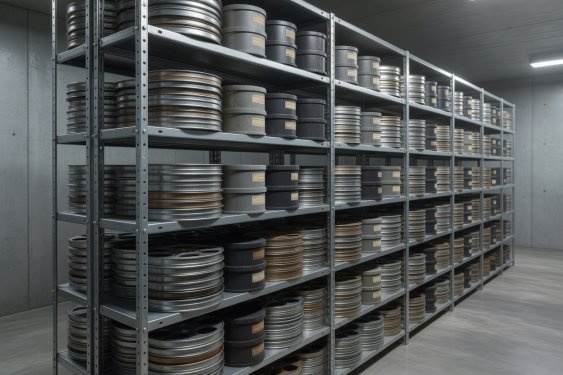
Metal film reels and 35mm acetate canisters stacked neatly in a temperature-controlled film preservation vault
Preserved master negatives stored in temperature-controlled vaults.
Psychological Suspense 1955 • Directed by Henri-Georges Clouzot

Les Diaboliques

Set within a dilapidated boys' boarding school outside Paris, Henri-Georges Clouzot’s thriller pits the fragile wife and hardened mistress of a sadistic headmaster into a joint conspiracy to drown him. The atmosphere is soaked in grease, bad wine, damp stone corridors, and rotting vegetation.

Clouzot weaponized audience anticipation through meticulous sound design—the tapping of a cane on wood floors, water dripping into an enamel tub, the grinding of a hearse engine. Long before shock endings became industry clichés, Clouzot included an explicit plea on the closing title card: "Do not be diabolic! Do not spoil the ending to your friends."

Why it matters today: It proved that tension operates best within credible, unglamorous domestic settings, paving the path directly for modern psychological thrillers.

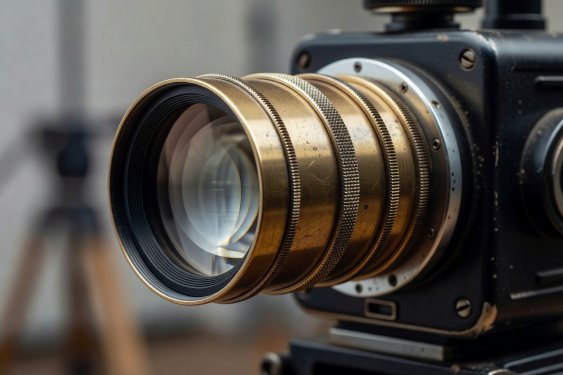
Close-up detail of an optical glass vintage cinema lens mounted on a studio camera
High-contrast vintage lenses defined the claustrophobic shadows of 1950s suspense.
Silent Landmark 1928 • Directed by Carl Theodor Dreyer

The Passion of Joan of Arc

Carl Theodor Dreyer stripped historical drama down to the landscape of the human face. Basing the script directly on the surviving Latin trial transcripts from 1431, Dreyer cast stage actress Renée Jeanne Falconetti in her only major film performance.

The camera stays locked on faces: sweat on skin, calculating sneers from the clerical interrogators, tear ducts glistening under stark studio lights. The film had an infamous physical survival journey: its original negative burned in an electrical warehouse fire, and the complete director's cut was only rediscovered in 1981 inside a janitorial cupboard at a mental institution in Oslo, Norway.

Why it matters today: It is definitive proof that silent cinema was not an embryonic stage waiting for dialogue, but an autonomous visual art form capable of overwhelming emotional truth.

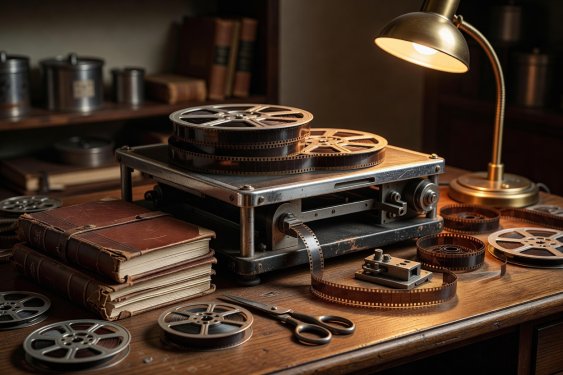
A flatbed film editing viewer and archival notebooks on an archivist work desk
Archival inspection tables allow researchers to study frame-by-frame cutting patterns.

How We Curate the Canon

We do not treat the canon as a static pantheon dictated by mid-century critics. Instead, we re-evaluate established titles by their direct formal qualities:

  • Structural economy: Does the editing construct rhythm rather than merely assemble coverage?
  • Performative truth: Are acting choices rooted in emotional gravity rather than theatrical artifice?
  • Material preservation: Has the film been verified against camera negatives rather than degraded copies?